

History of building websites, 5 of 10
In the web 2.0 years, your site became a heap of borrowed parts
Themes and plugins let owners add almost anything to a site without writing code, and every part they added was one more part to keep up
By Orla Finch ·
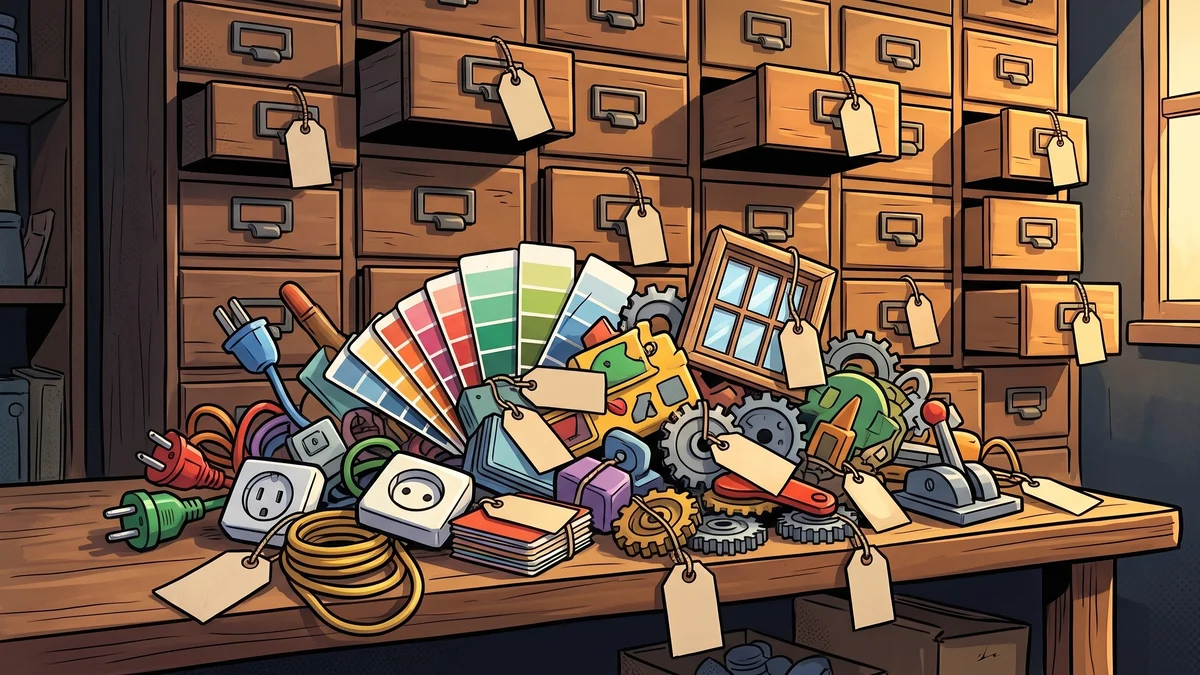
Say it is 2007, and Priya, who began running her own site last time, wants it to do more: a contact form, a photo gallery, a list of her newest pictures down the side. She will not write any of it. For each one, she finds a part someone else made and adds it. A gallery here, a form there, and her site grows a little every weekend.
Those years had a name. Web 2.0 meant sites where visitors did more than read: they left comments, tagged things with keywords, kept profiles and wrote blogs of their own. The name caught on after Tim O'Reilly and Dale Dougherty used it for a conference in 2004.
Priya's site is built from the two kinds of borrowed parts we met last time: plugins, which add features, and a theme, which sets the look. She can add or update a plugin without rebuilding the program it plugs into.
These parts lived inside content management systems, the programs that keep a site's words and build its pages, which an owner installs on a web server. Easy publishing tools like WordPress were one of Web 2.0's main features.
Here is the price. Every part has its own maker and its own updates. Not every plugin keeps up when WordPress changes, so one may stop working, and the plugin directory warns you when a plugin has not been tested with the last two major versions. Attackers learned to go after bugs in plugins rather than in WordPress itself. In 2013, some of the 50 most downloaded plugins were found open to common attacks.
So Priya now looks after a heap of parts: the system, her theme, every plugin. None of them is hard on its own; it is the number of them that adds up. The advice from those years still holds: keep all of it updated, and use only parts you trust.
For Priya, and for you, every part you add to a site is one more part to keep up.